Gold is probably the one gift in India that never needs an explanation. Nobody asks why you brought gold to a wedding, a baby’s naming ceremony, or a Diwali gathering; the only real questions are how much, in what form, and whether it’s appropriate for your particular relationship to the person receiving it. Those questions turn out to have reasonably clear answers once you know the conventions, and getting them right is less about spending more and more about matching the gift to the occasion properly.
We help customers work through exactly this at our Ghatkopar West counter all year round, not just during wedding season, so here’s the guide we actually give people.
Why Gold Works as a Gift Across Every Occasion
Before the specifics, it’s worth understanding why gold occupies this unique space. Unlike most gifts, gold doesn’t really depreciate in the way manufactured goods do, it’s recognised as a store of value across generations, and it carries auspicious associations in nearly every Indian cultural and religious tradition, regardless of region or community. A gift of gold is simultaneously a gesture of affection, a blessing, and a tangible asset the recipient can hold onto, resize, melt down, or pass along, which is a combination almost nothing else offers. That’s the reason it remains the default gift at life’s major milestones even as fashions in everything else change constantly.
Weddings: The Biggest Category, and the Most Variable
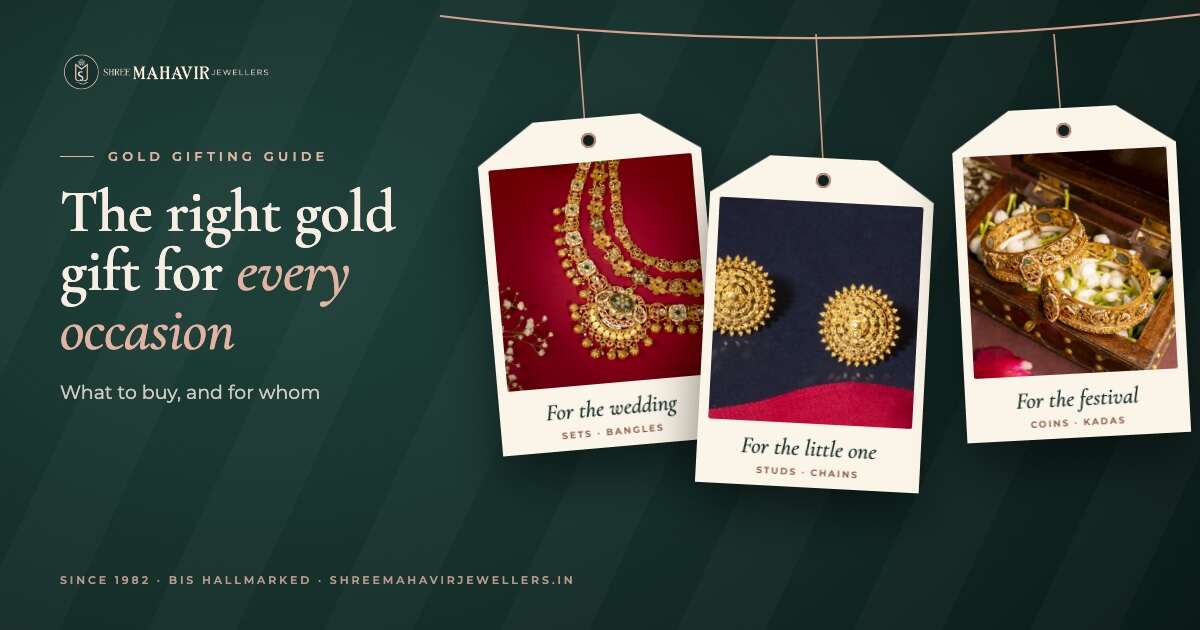
Wedding gifting is where gold conventions are most developed and most variable by relationship. Immediate family, parents, siblings, grandparents, typically gift more substantial pieces: a necklace set, a kada, or a significant set of bangles, often pieces the couple will use as part of the actual bridal look rather than a token gift given afterward. Extended family and close friends more commonly gift gold coins or smaller jewellery pieces, something meaningful without attempting to match what immediate family gives. For a broader circle of guests, a modest gold coin, often in the half-gram to two-gram range, is a well-established way to mark the occasion without it feeling like an obligation-driven purchase.
One thing worth saying plainly: there’s no fixed rupee amount anyone is required to spend. The appropriate gift scales with your closeness to the couple and your own means, and a smaller, genuinely chosen gift is always better received than a larger one given reluctantly.
Baby Ceremonies: Namkaran, Annaprashan, and Mundan
Baby milestone ceremonies form their own gifting category, and gold has a specific, long-standing role here beyond simple celebration. At the Namkaran (naming ceremony), a small gold coin or a simple piece like a tiny bangle or chain is a traditional gift from grandparents, aunts, and uncles, often intended as the child’s first piece of gold, something kept rather than worn immediately. Annaprashan (the first solid-food ceremony) and Mundan (the first haircut) carry similar conventions in many families, with small gold coins or symbolic pieces gifted as blessings for the child’s future. These gifts tend to be modest in size deliberately; the gesture and the tradition matter more than the weight of gold involved, and a half-gram or one-gram coin is entirely appropriate and commonly chosen for exactly this reason.
Birthdays and Anniversaries: Where Personal Taste Matters Most
Birthday and anniversary gifting is the category with the least fixed convention and the most room for personal judgement, which also makes it the easiest to get wrong by overthinking it. A milestone birthday or a significant wedding anniversary (25th, 50th) often calls for something more considered, a piece the recipient will genuinely wear, rather than a generic coin. For these occasions, it’s worth actually knowing the recipient’s taste: whether they wear gold daily or only on occasions, whether they prefer traditional or contemporary design, and what they already own, since duplicating an existing piece is a common and avoidable gifting mistake. A thoughtful pendant or a pair of earrings chosen for someone’s actual style says considerably more than a heavier but generic piece.
Festivals: Dhanteras, Akshaya Tritiya, and Diwali
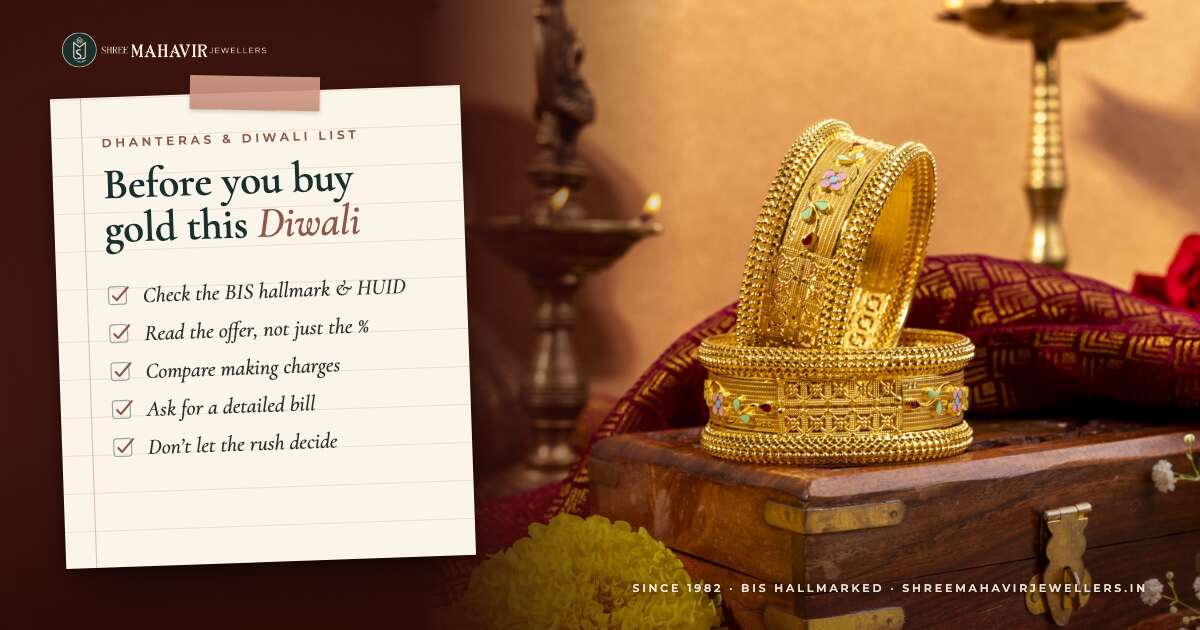
Certain dates on the Indian calendar are specifically associated with buying gold as an auspicious act, and gifting around these dates follows the same logic. Dhanteras, the day before Diwali, is traditionally considered an auspicious day to buy gold, silver, or new utensils, and gold coins are a common gift exchanged between family members and given by businesses to employees and clients around this time. Akshaya Tritiya carries similar auspicious weight specifically for gold purchases, with the belief that wealth acquired on this day brings lasting prosperity. For both occasions, a gold coin is the overwhelmingly standard gift form rather than jewellery, precisely because the ritual significance is about acquiring gold itself on an auspicious day, not about a specific design or piece.
Housewarmings and Corporate Gifting
Beyond personal and religious occasions, gold has a growing role in two other contexts worth mentioning. For a housewarming (griha pravesh), a small gold coin or a symbolic piece is an increasingly common gift alongside the more traditional silver or household items, chosen specifically for its auspicious associations with prosperity in a new home. In the corporate world, gold coins, usually in small denominations, have become a standard gifting choice around Diwali for employees and important clients, valued precisely because they’re universally appropriate regardless of the recipient’s personal taste in jewellery design.
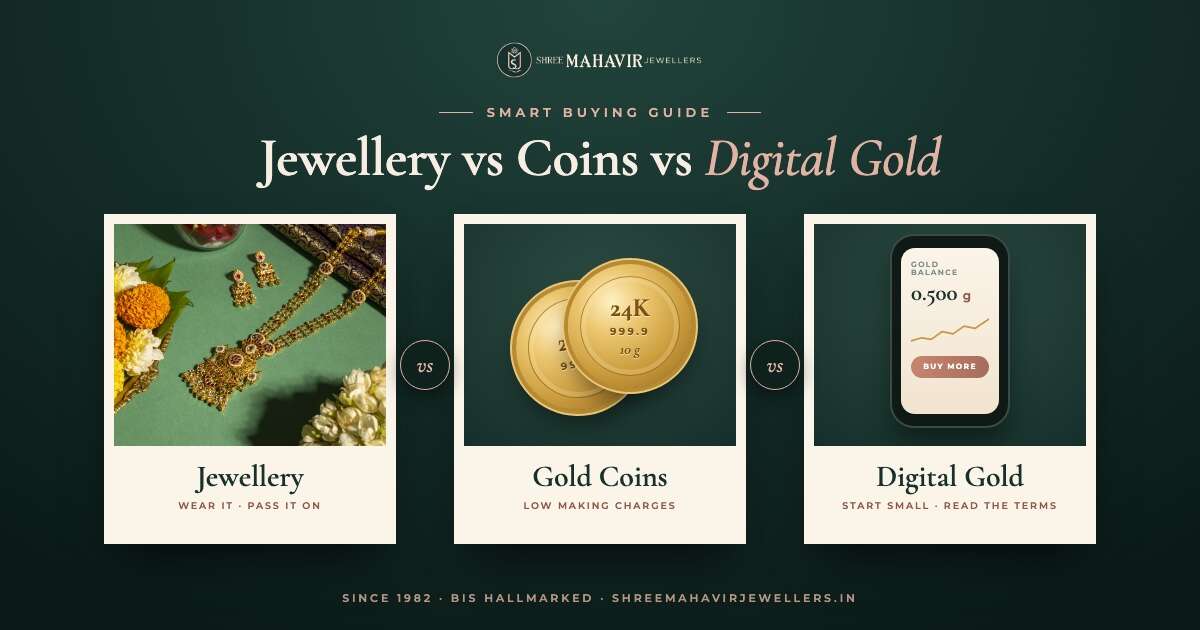
Choosing the Right Form: Coin, Jewellery, or Digital Gold
Form matters as much as occasion. Coins are the right choice whenever the gift is meant to be a pure value gesture rather than a wearable one: baby ceremonies, festivals, corporate gifting, and any occasion where you don’t know the recipient’s jewellery taste well enough to choose a design confidently. A coin removes the guesswork entirely; it’s simply gold, in a denomination you choose, with nothing to get wrong about style or fit.
Jewellery is the right choice when you know the recipient well enough to choose something they’ll actually wear, and it tends to be the better gift for people you’re close to, since the sentiment of a chosen design adds something a plain coin can’t. It’s also effectively the only appropriate form for wedding gifts intended to form part of the bridal look itself.
Popular coin denominations for gifting purposes typically run from half a gram to about two grams for smaller, token gestures, up to five or ten grams for more significant wedding or milestone gifts, with larger denominations generally reserved for investment purchases rather than gifting. Choosing a smaller, well-presented coin is almost always a better gifting instinct than stretching your budget toward a denomination that feels obligatory.
A Note on Gift Tax, Since People Rarely Ask and Should
This is worth knowing if you’re on the receiving end of significant gold gifts, particularly at weddings. Under Indian income tax rules, gifts of any value received from specified close relatives, parents, spouse, siblings, and a defined set of other close family, are fully exempt from tax regardless of amount. Gifts received from non-relatives, friends, distant relatives, colleagues, are tax-free only up to a combined threshold within a financial year; once total gifts from non-relatives in a year exceed that threshold, the full amount can become taxable as income in the recipient’s hands, not just the excess. Wedding gifts specifically carry their own broader exemption regardless of who they’re from. None of this should discourage generous gifting, but it’s worth being aware of, especially for families receiving substantial gold at a wedding, and it’s a sensible reason to keep gift receipts and a simple record of what was received from whom.
Buying With Confidence, Whatever the Occasion
Whatever occasion you’re shopping for, the one constant worth insisting on is proper certification. Any gold gift, coin or jewellery, should carry a valid BIS hallmark with its individual HUID code, verifiable on the BIS CARE app, regardless of how small or symbolic the piece is. A gift is meant to be kept, and keepable gold should be properly certified gold.
We stock a full range of gifting options at our Ghatkopar West showroom, from gold coins for baby ceremonies and festivals to considered pieces like pendant sets, bracelets, and men’s rings for the gifts you want to get genuinely right. Tell us the occasion and your relationship to the recipient, and we’ll help you land on the right form and the right amount without any pressure to overspend. We’re open Friday through Wednesday, 11am to 8:30pm, on L.B.S. Marg.