Gold jewellery has a reputation for being nearly indestructible, and in one sense, that’s true, it doesn’t rust, tarnish, or corrode the way many other metals do. But “won’t corrode” isn’t the same as “needs no care.” Over months of wear, gold jewellery picks up a dulling film of everyday oils, perfume residue, and general grime that quietly takes the shine off even your most cherished pieces. The good news is that most of this is entirely reversible at home, with things you likely already have in your kitchen.
Why Gold Loses Its Shine in the First Place
Pure gold itself doesn’t react with air or moisture the way silver or copper does, which is part of why ancient gold jewellery can still be found gleaming centuries later. But almost all jewellery-grade gold, 22K, 18K, and similar, is alloyed with small amounts of other metals for durability, and it’s this everyday contact with skin oils, lotions, perfumes, and environmental dust that builds up a dulling layer on the surface over time. It’s not damage in any structural sense; it’s simply residue sitting on top of the metal, and it comes off far more easily than most people expect.
The Simple, Safe Home Cleaning Method
For plain gold pieces without delicate stone settings, this basic method works well and carries minimal risk:
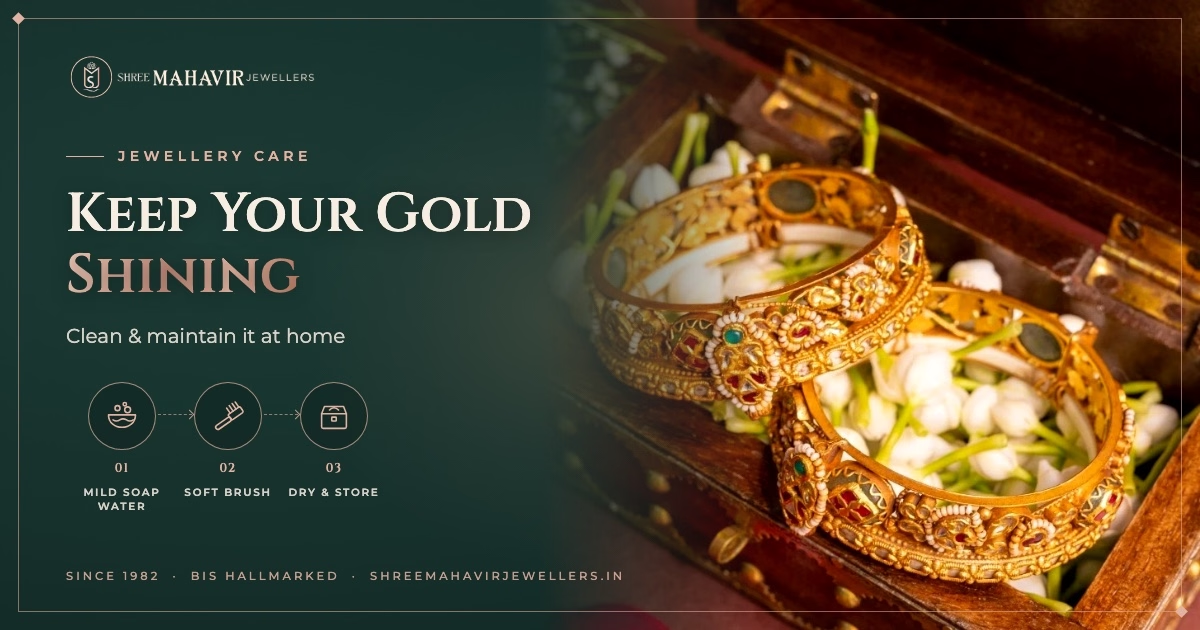
- Fill a small bowl with warm (not hot) water and add a few drops of a mild, unscented dish soap.
- Let the piece soak for 15-20 minutes to loosen surface grime.
- Gently brush the piece with a very soft brush, a clean, soft-bristled toothbrush works well, paying particular attention to any engraved detailing or textured areas where residue tends to collect.
- Rinse thoroughly under running water to remove any soap residue.
- Pat dry immediately with a soft, lint-free cloth. Don’t let pieces air-dry, as this can leave water spots.
For pieces with delicate stone settings, antique work, or intricate meenakari and kundan detailing, we’d genuinely recommend skipping the DIY soak and bringing it to us instead, some traditional techniques use adhesives or settings that aren’t meant to be submerged, and a professional can clean these safely without risking the setting.
What to Avoid Completely
A few common household products can do real, sometimes irreversible damage to gold jewellery, and are worth actively avoiding:
- Chlorine: found in swimming pools and some household cleaners, chlorine can weaken gold alloys over repeated exposure and, in some cases, cause visible discolouration. Always remove gold jewellery before swimming.
- Harsh chemical jewellery cleaners: many commercial “instant shine” dips are formulated for costume jewellery or other metals and can be too abrasive for fine gold pieces, particularly those with antique finishes or delicate stone work.
- Toothpaste: a commonly repeated home remedy that we’d actually advise against; most toothpaste contains mild abrasives meant for enamel, not soft precious metal, and repeated use can create fine surface scratches over time.
- Ultrasonic cleaners at home: while jewellers use professional ultrasonic equipment safely on many pieces, uncalibrated home versions can be too aggressive for delicate antique settings or pieces with fragile stone work.
Everyday Habits That Prevent Most of the Damage
A surprising amount of jewellery care isn’t about cleaning at all, it’s about avoiding unnecessary exposure in the first place:
- Put jewellery on last, after applying perfume, lotion, or hairspray, so these products don’t come into direct contact with the metal and settle into engraved detailing.
- Remove rings and bangles before housework, gardening, or exercise, where they’re exposed to chemicals, abrasion, or impact.
- Store pieces separately from each other, ideally in soft pouches or a lined box, rather than tossed together in one drawer, gold is soft enough that pieces can scratch each other over time.
- For pieces you wear rarely, an occasional wipe with a soft cloth before storing prevents tarnish-causing residue from sitting on the surface for months at a stretch.
When to Bring It In Instead of Cleaning at Home
Some situations call for a professional’s eye rather than a home fix: antique pieces with kundan or meenakari work, anything with loose-feeling stones, jewellery that’s visibly bent or misshapen, or pieces you simply haven’t had inspected in several years. A professional cleaning also gives us a chance to check stone settings, clasps, and any wear points before small issues become bigger ones.
At Shree Mahavir Jewellers, we’re always happy to clean and inspect jewellery you’ve bought from us, and pieces from elsewhere too, free of charge as part of an in-store visit. If you own antique or heavily detailed pieces from our kada or necklace set collections, or a men’s kada bracelet with detailed work, we’d genuinely rather see it in person than have you risk a DIY method on something with delicate craftsmanship. A little regular care goes a long way toward keeping gold looking the way it did the day you brought it home, for years, and often generations, after.