Stand in front of our display cases for long enough, and you’ll notice customers gravitate toward one of two very different aesthetics: the intricate, textured richness of antique-style gold jewellery, or the sleek, diamond-cut shine of contemporary designs. Neither is objectively “better”; they’re built for different purposes, different occasions, and honestly, different personalities. Here’s how to think about the difference before you choose.
What “Antique” Jewellery Actually Means
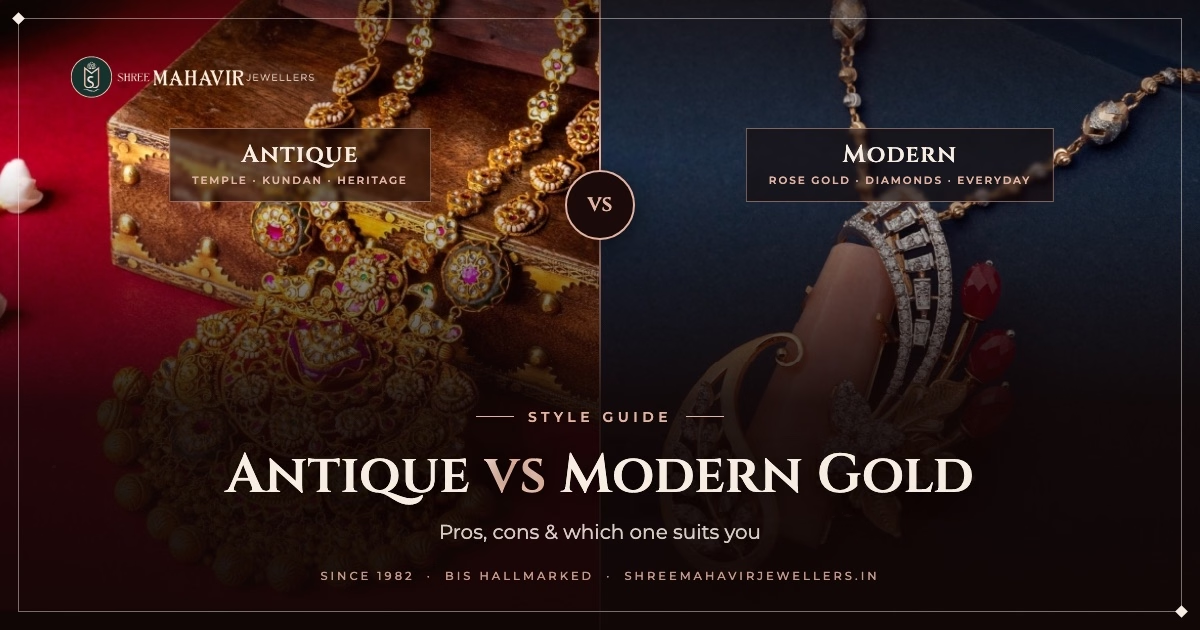
In the Indian jewellery context, “antique” doesn’t necessarily mean the piece itself is old; it refers to a style and craftsmanship tradition, often recreating techniques that are centuries old, even on a piece made this year. Antique-style jewellery typically features:
- Hand-worked detailing: techniques like filigree, hand-carving, and repoussé work that require significant time and specialised skill from artisans trained in these traditional methods.
- Temple and traditional motifs: deity figures, lotus patterns, peacocks, and other symbolism drawn from South Indian temple jewellery traditions and broader Indian cultural heritage.
- Kundan and meenakari work: Kundan involves setting uncut, polished gemstones into gold using a traditional technique rather than modern claw settings, while meenakari refers to intricate enamel work that adds vivid colour detailing to the gold surface.
- A matte or textured finish: rather than the high polish typical of contemporary pieces, antique jewellery often has a deliberately muted, warm finish that gives it a distinctly heirloom character.
What “Modern” Jewellery Typically Looks Like
Contemporary or modern gold jewellery tends to prioritise different things:
- Clean, minimal lines: designs built around simplicity and versatility rather than dense ornamentation.
- Machine precision: many contemporary pieces use machine-assisted manufacturing for consistent finishing, which typically brings production time and cost down compared to fully hand-worked pieces.
- Diamond-cut and high-polish finishes: a bright, reflective shine that catches light differently from the matte richness of antique work.
- Lighter overall weight: modern designs often favour wearability for daily use over the substantial weight traditionally associated with bridal or heirloom antique pieces.
Craftsmanship and Time: The Real Difference Behind the Price
This is where the two styles genuinely diverge in terms of what you’re paying for. A hand-crafted antique piece with kundan work or fine meenakari detailing can take skilled artisans considerably longer to complete than a machine-assisted contemporary design of similar weight, and that labour difference shows up directly in making charges, not in the gold itself. This doesn’t make antique jewellery “overpriced”; it reflects genuine, specialised craftsmanship that fewer artisans practice today compared to previous generations, which if anything makes it more valuable as a skill, not less.
Which Suits Which Occasion?
Rather than thinking of this as antique versus modern in a competitive sense, it’s more useful to think about what each suits best:
- Antique-style pieces genuinely shine for weddings, festivals, and milestone occasions, they carry a sense of tradition and heirloom weight that suits the significance of the event, and they tend to be the pieces families pass down across generations.
- Modern pieces tend to suit everyday wear, office settings, and casual occasions where a lighter, more versatile piece that pairs easily with different outfits makes more practical sense.
- Many buyers choose both, an antique bridal set for the wedding day itself, alongside lighter contemporary pieces for daily wear afterward.
Resale and Long-Term Value Considerations
Both styles retain the underlying value of their gold content, since that’s tied to purity and weight rather than design style. Where antique pieces sometimes hold an edge is in their craftsmanship value and emotional/heirloom significance within a family, a well-made kundan necklace passed down for a generation often carries meaning well beyond its gold content. Modern pieces, meanwhile, tend to offer more flexibility if your taste changes over time, since simpler designs are easier to re-set, resize, or repurpose.
Seeing Both Side by Side
The best way to actually decide is to see both styles in person rather than choosing based on photos alone, the texture, weight, and finish of antique work in particular is hard to fully appreciate without holding the piece. At Shree Mahavir Jewellers, our necklace sets and kada collections showcase traditional antique craftsmanship passed down through three generations of our family, while our rings and pendant sets include contemporary designs suited to everyday wear. Come try both on, most customers find the right choice becomes obvious once they see how each catches the light and sits against their skin, in a way no photograph quite captures.